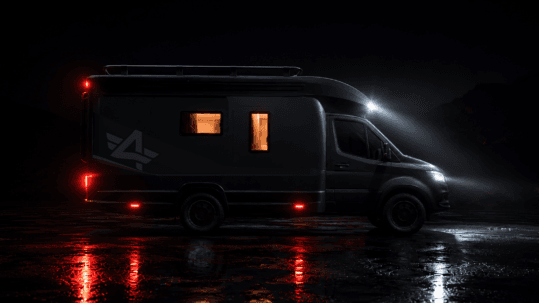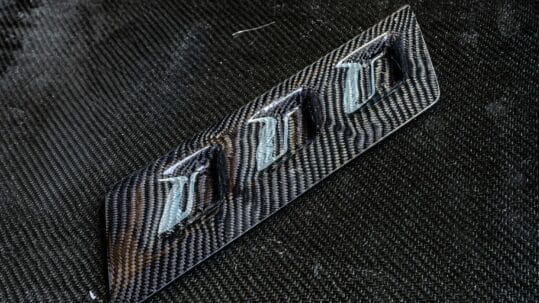



The construction technique of the Atlantis monocoque does not originate from the camper industry. It comes from competitive naval engineering, the same used for America’s Cup vessels, the most technologically advanced sailing boats in the world. Laminated carbon structures, high-density foam cores, nautical gel coat finishes: the construction process is the same.
Those familiar with the sector know that the difference between a traditional panel-built camper and one structured this way is not only measurable on paper. It is measured in years of use without extraordinary bodywork interventions, in road behaviour that doesn’t wear you out, in interior temperatures that remain stable even at high altitudes in winter, and in a residual value that holds over time.
Carbon fibre, nautical gel coat and closed-cell expanded PVC, integrated into a single structure connected to the AL-KO chassis, are the technologies that distinguish Atlantis monocoques.
Carbon fibre: torsional rigidity and car-like dynamics
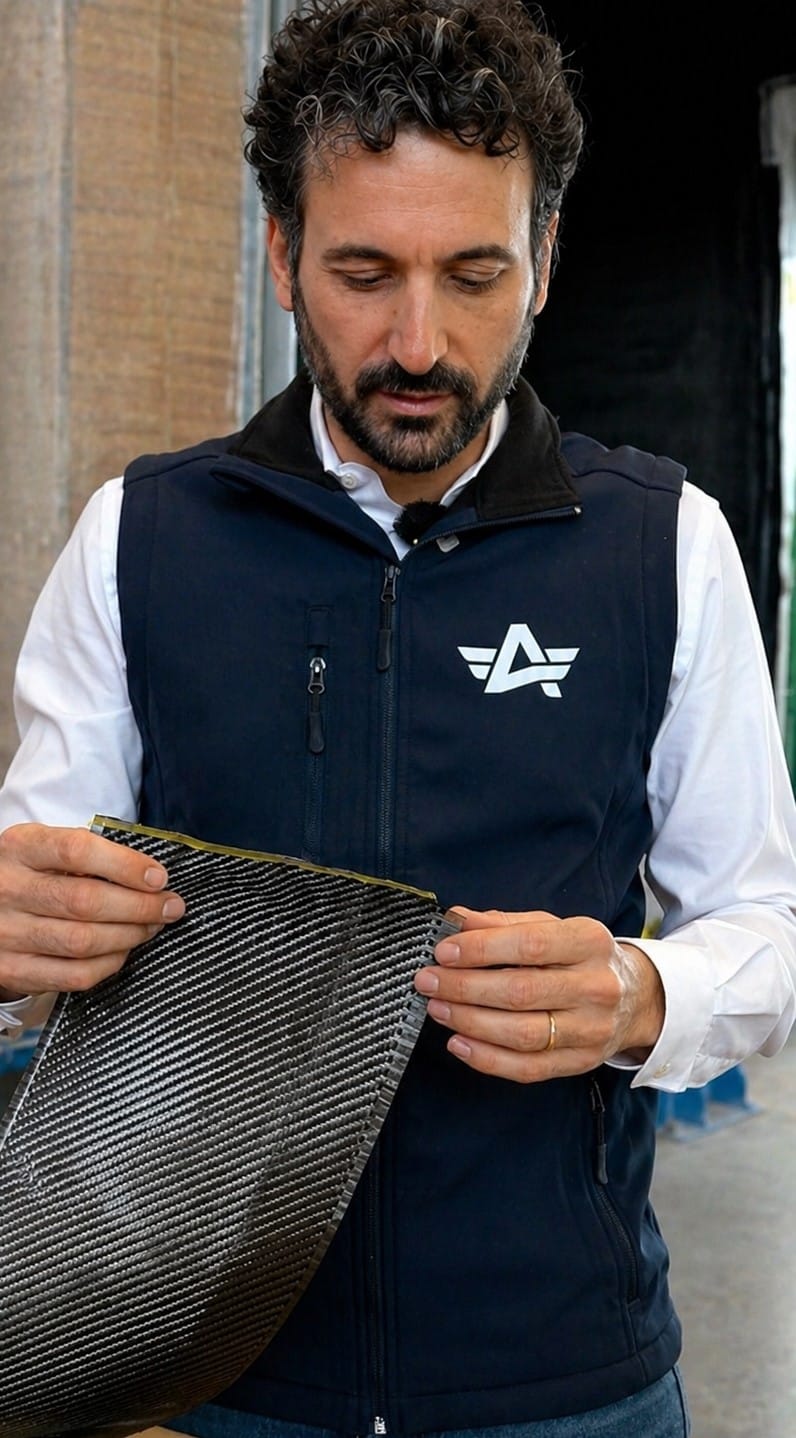
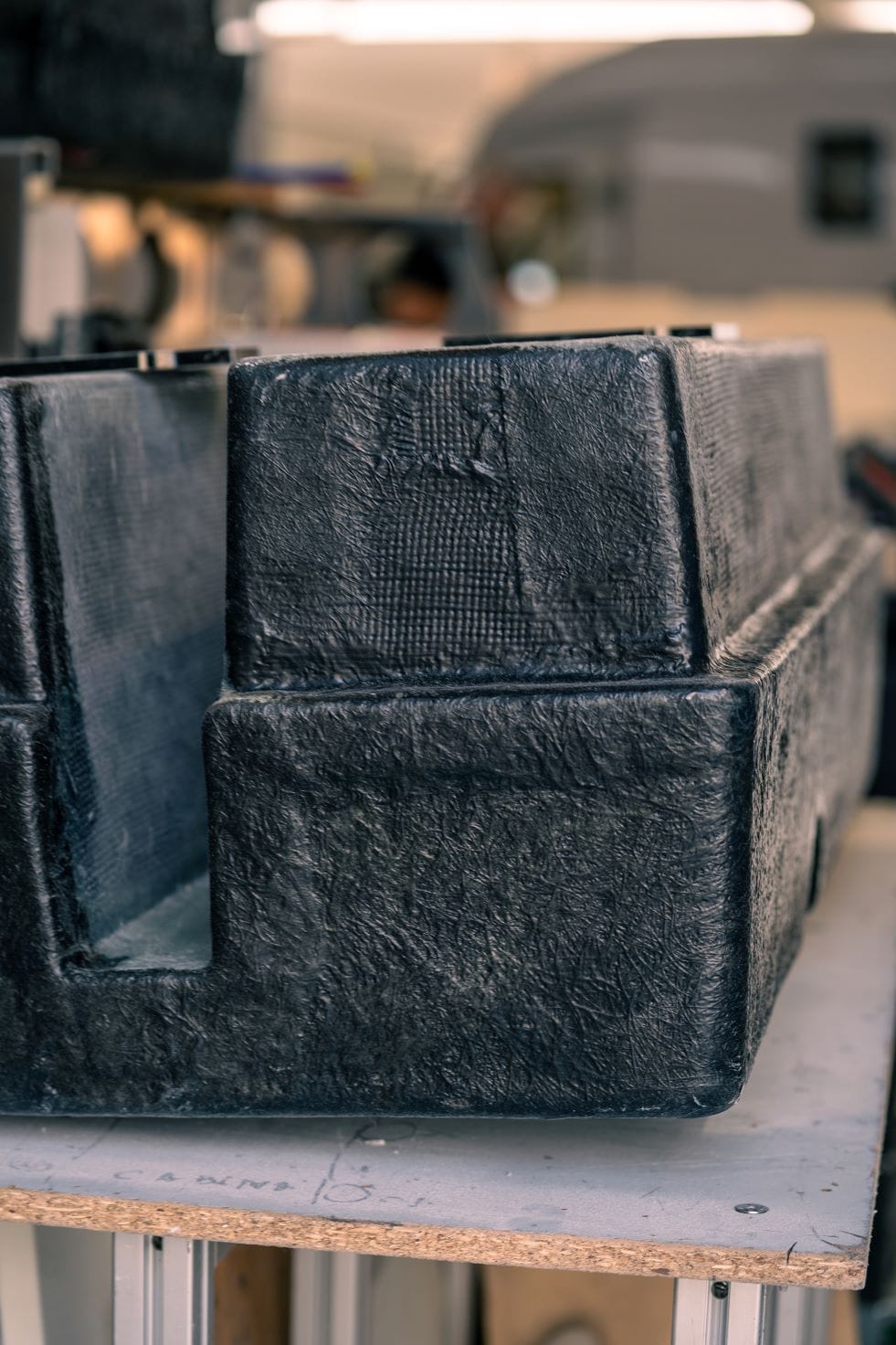
Atlantis carbon fibre is made up of pure carbon filaments; the result is a material with a strength-to-weight ratio superior to other classic materials, such as steel.
But the real advantage, in the context of a camper, is not only the weight saving of approximately 150 kg — it is the torsional rigidity that carbon fibre guarantees to the entire body. When driving through a bend, over a speed bump or on an uneven surface, a vehicle with low torsional rigidity tends to flex slightly around its longitudinal axis. The carbon monocoque eliminates this deformation.
The practical result is a driving experience far closer to that of a car than a traditional camper:
- Improved cornering stability
- Reduced body roll
- Less creaking
For those who have already driven other campers, the difference is immediately noticeable.
But this is not due to carbon alone: it is the combination of all technologies that gives Atlantis Campers these characteristics.
Nautical gel coat: born for competition
Closed-cell expanded PVC: maximum insulation, zero infiltrations
Atlantis uses sheets of closed-cell expanded PVC, 3 cm thick, as an insulating core. The distinction compared to open-cell PVC, and many other traditional insulators, is fundamental.
In an open-cell material, the micro-cavities that make up the internal structure are interconnected: in the presence of moisture, condensation or any micro-infiltration, water is absorbed and retained within the panel. The process of degradation, swelling, loss of insulation, and mould formation can occur silently over the course of years, without visible signs on the outside.
In closed-cell PVC, each micro-cavity is sealed and independent. The material does not absorb water under any conditions. Even in the presence of an infiltration, water does not spread through the panel — it remains localised and the damage is contained and repairable.
Monocoque: materials become a system
Carbon fibre, gel coat and expanded PVC are not three independent choices: they are three components of a single construction system, providing rigidity, insulation and external finish.
The Atlantis monocoque is built as a single shell, with no joints between the side wall, front wall, floor and roof. This eliminates at the root the structural weak points typical of glued or screwed panel construction, where over time failures, micro-infiltrations and loss of insulation appear.
Being a single block, the monocoque offers a superior degree of safety: its structure absorbs impacts by exploiting the entire available surface, allowing a much wider dispersion of forces, effectively preserving the safety of the people inside.
This monocoque is then connected to the AL-KO chassis in an integrated manner. For all the details on this structural union, please refer to our dedicated Blog post.
Come and discover the Atlantis world
Related articles

Atlantis Carbon 4×4
WHAT’S NEW 2026 Atlantis Carbon 4×4 The carbon fiber monocoque enters the world...
Luxury Motorhome, What Does It Really Mean?
Luxury Motorhome, What Does It Really Mean? When people talk about luxury motorhomes, thou...
The technology behind the Atlantis monocoque
The construction technique of the Atlantis monocoque does not originate from the camper in...